
End-to-end SEO After Site Migration: Restoring Indexing and Increasing Traffic by 124%


.png)
Client
A high-ticket e-commerce store with an offline showroom
Our goal
To increase organic traffic from product-related search queries and further improve the website’s visibility in search results.
Criteria for evaluating SEO performance:
improved rankings for priority commercial search queries
achieving Top 10 and Top 3 rankings in the medium term
achieving No. 1 position in search results for key queries within high-priority semantic clusters as a strategic benchmark
Project baseline
Region: Nationwide
Search engine: Google
CMS: Horoshop
Languages: Russian as the main promotion language, and English
Project start: May 2025
Project details
Due to the Non-Disclosure Agreement (NDA), we can only share the results without disclosing sensitive information, including the company name, domain, and selected internal metrics. At the same time, all key insights and approaches have been preserved so that you can assess the logic behind our work and the results achieved.
All technical edits and content management tasks are handled by Horoshop platform developers, while minor changes are handled by the client or project manager. Copywriting is handled by the Aweb team.
Project challenges
In February 2025, the client’s website was migrated from a Russian-language platform to Horoshop. The migration was handled by developers without SEO specialist involvement, which led to a number of technical and SEO-related issues.
The migration resulted in significant losses:
some pages were either not migrated or dropped out of the search index;
the site architecture was disrupted;
organic traffic dropped sharply.
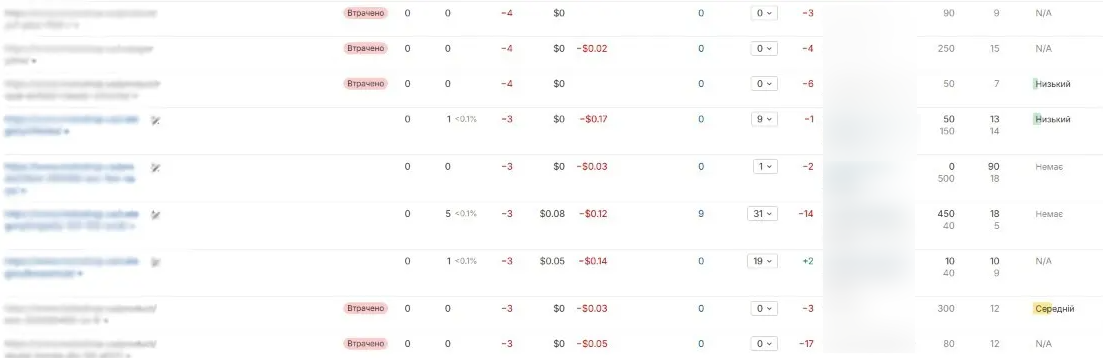
As an example, a traffic-generating blog page was lost due to an incorrect migration:
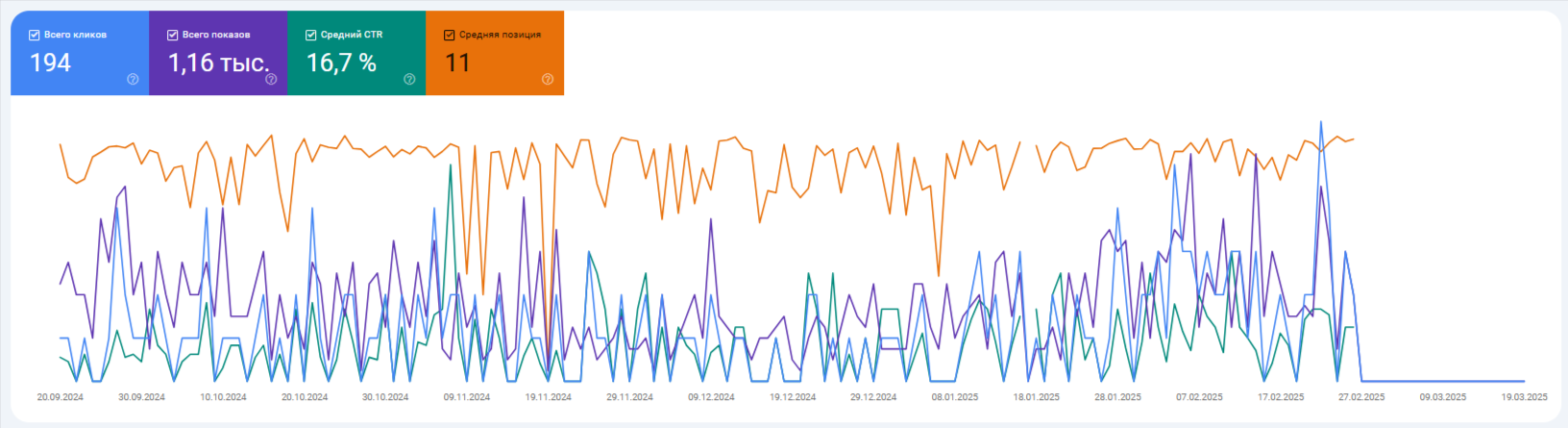
According to the client, the negative trend had been noticeable since Russia’s full-scale invasion of Ukraine began, while the migration itself significantly worsened the situation and accelerated the decline in rankings. An additional challenge was that, by the time of the migration, the website had seen virtually no SEO development for nearly a decade, maintaining its rankings largely due to accumulated authority. As a result, algorithm updates and technical changes eroded the website’s accumulated authority.
The chart below illustrates the decline in organic pages and traffic during the website migration:
.png)
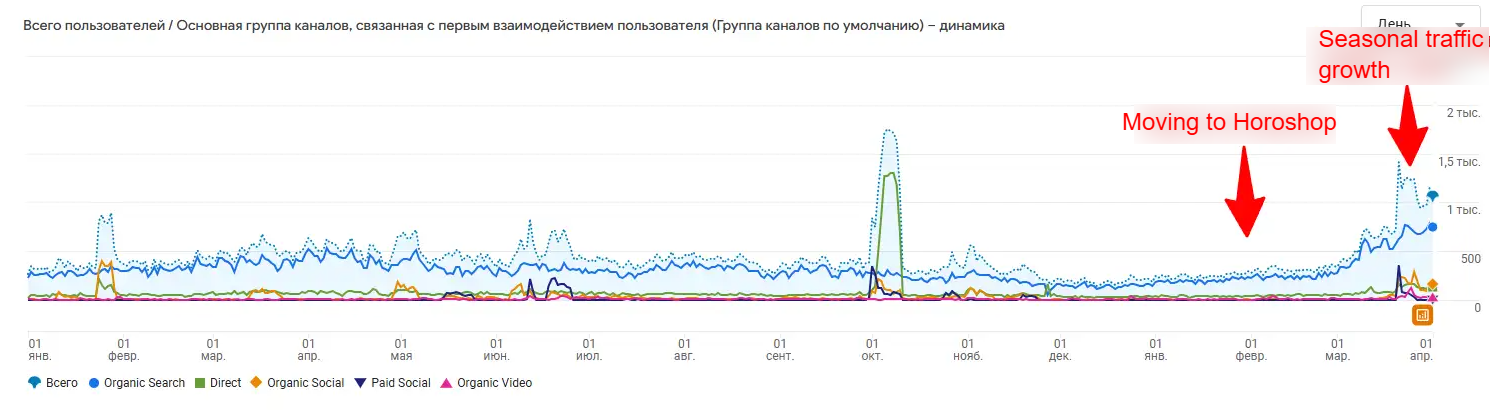
At the time of the initial quick SEO audit in late March 2025, the website was still holding its ground thanks to the seasonal demand in the niche and accumulated authority:
An additional risk factor in May 2025 was the launch of Ukrainian and English versions with template-based content and technical errors in the indexing settings, such as incorrectly configured robots.txt directives, causing additional indexing issues and posing a risk of duplicate content.
This gave us a clear set of priorities at the start of collaboration:
addressing critical issues caused by the site migration;
restoring proper indexing;
recovering organic traffic and driving further growth.
Project strategy
Resolving post-migration and technical issues
First, our specialists conducted a full technical audit of the website and identified 10 critical issues that required urgent attention.
| Technical implementation | Audit result | Priority | Implemented by | |
1. |
Website IP Analysis |
OK |
||
2. |
Checking whether the website contains malware or appears on antivirus blacklists |
requires fixing |
high |
software developer |
3. |
Domain history check via Whois and web.archive |
OK |
||
4. |
Checking for elements that may negatively affect user interaction with the website |
OK |
||
5 |
Checking whether SEO-friendly URLs are present and properly generated, making them easy for users to read |
OK |
||
6. |
Checking the consolidation of mirror domains and full duplicates |
OK |
||
7. |
Checking for full content duplication |
|||
8. |
Checking whether technical pages, duplicate-content pages, or empty pages are indexed |
requires fixing |
high |
software developer |
9. |
Checking server response codes for page requests |
OK |
||
10. |
Checking the page code for HTML and CSS errors. |
requires fixing |
high |
software developer |
11. |
Checking for the presence of 404 pages and broken internal links |
requires fixing |
high |
software developer |
12. |
Checking the presence of an SSL certificate or errors in its settings |
OK |
||
13. |
Checking for hidden or spam links to external resources |
requires fixing |
high |
software developer |
14. |
Checking robots.txt configuration |
OK |
||
15. |
Set up Google Search Console |
OK |
||
16. |
Set up Google Analytics |
OK |
||
17. |
Check Sitemap.xml |
OK |
||
18. |
Checking whether CSS and JS files are accessible |
OK |
||
19. |
Checking for structured data markup |
requires fixing |
high |
software developer |
20. |
Checking for social media buttons |
OK |
||
21. |
Checking website loading speed |
OK |
||
22. |
Multilingual setup and optimization check |
requires fixing |
high |
software developer |
23. |
Mobile version availability check |
OK |
||
24. |
Checking website responsiveness across different types of devices |
OK |
||
25. |
Checking whether text content is displayed correctly |
requires fixing |
high |
software developer |
26. |
Monitoring Stat.Aweb content in the SEO monitor |
requires fixing |
low |
software developer |
27. |
Checking for partially duplicated content |
requires fixing |
low |
software developer |
28. |
Checking for on-page elements required for ranking, including commercial factors |
requires fixing |
high |
software developer |
29. |
Fix the removal of outdated and unavailable products/services |
OK |
||
30. |
Checking for content present in the page code but not displayed on the website pages, and comparing it with the cache |
OK |
||
31. |
Checking whether content is displayed with JavaScript disabled |
OK |
||
32. |
Checking whether product pages are indexed |
OK |
| Content | Audit result | Priority | Implemented by | |
33. |
Affiliate presence check |
OK |
||
34. |
Checking the correct generation of meta tags |
requires fixing |
high |
software developer |
35. |
Checking for target pages based on the semantic core |
OK |
||
36. |
Checking content presence and uniqueness on the website |
OK |
||
37. |
Checking text content optimization |
OK |
||
38. |
Checking content formatting availability |
OK |
| Structure and Linking | Audit result | Priority | Implemented by | |
39. |
Checking for a breadcrumb menu |
OK |
||
40. |
Website linking check |
OK |
||
41. |
Checking for indexed and optimized filter pages |
high |
||
42. |
Checking for broken links |
OK |
| Image | Audit result | Priority | Implemented by | |
43. |
Image optimization |
OK |
| Usability | Audit result | Priority | Implemented by | |
|---|---|---|---|---|
44. |
Usability |
OK |
The audit revealed critical technical issues that were directly affecting indexing, search engine visibility, and organic traffic levels.
The key risks at this stage included improper page indexing, duplicate content, broken links, code-level errors, and an incomplete multilingual setup. Some pages were either lost after the migration or are being processed incorrectly by search engines, which limited their ability to rank properly.
The situation was further complicated by issues with meta tags, structured data markup, and commercial factors, which reduce both page relevance and conversion performance.
Combined, these factors severely limited the website’s SEO potential and restricted its growth.
1. Alongside the technical audit, our SEO specialists prepared recommendations to improve the website’s alignment with Google’s Search Quality Rater Guidelines:
improve the homepage content by adding key information blocks about the store, including an FAQ section, customer reviews, an “About the Store” section, a blog, and special offers;
improve category and product pages by adding FAQ sections, useful product information, customer reviews, payment and delivery terms, warranty details, product sections, and relevant videos;
create a Contacts page;
create a page for exchanges, delivery and returns;
2. Improving the website structure was one of the high-priority tasks in the early stages of the project. We analyzed the pre-migration version of the website to identify “lost” or archived pages, reviewed the competitors’ website structures in detail, and prepared recommendations:
include the main categories in the site menu and make navigation more user-friendly;
create filters by vehicle type and other important parameters;
improve the blog by restoring all pages that were “lost” during the migration;
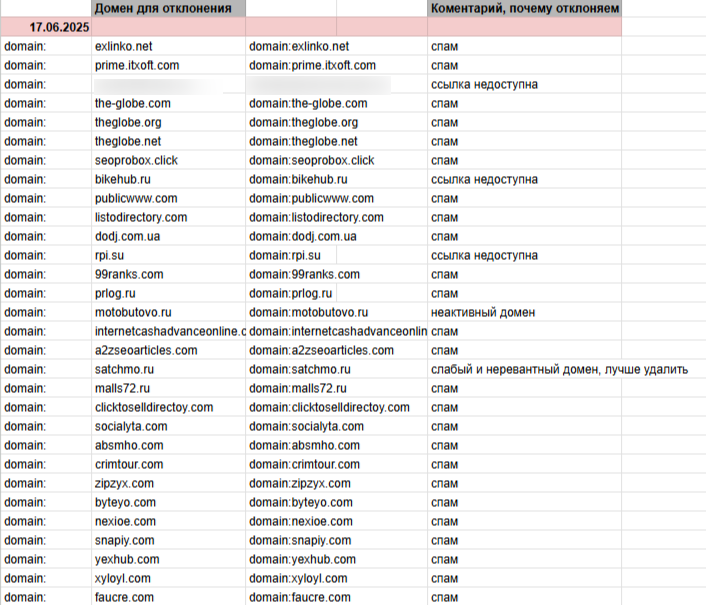
3. Additionally, our specialists analyzed the website’s backlink profile and identified 199 spammy domains that were disavowed. At the same time, work was carried out to build a quality backlink profile.
Content Work
The first stage involved a complete review of the website’s semantic core. We carried out a full-scale expansion of the semantic core based on the current demand patterns and business priorities.
At the same time, we optimized meta tags and page content. The first iteration focused on covering the key semantic groups as efficiently as possible within the available budget. Priorities were defined jointly with the client.
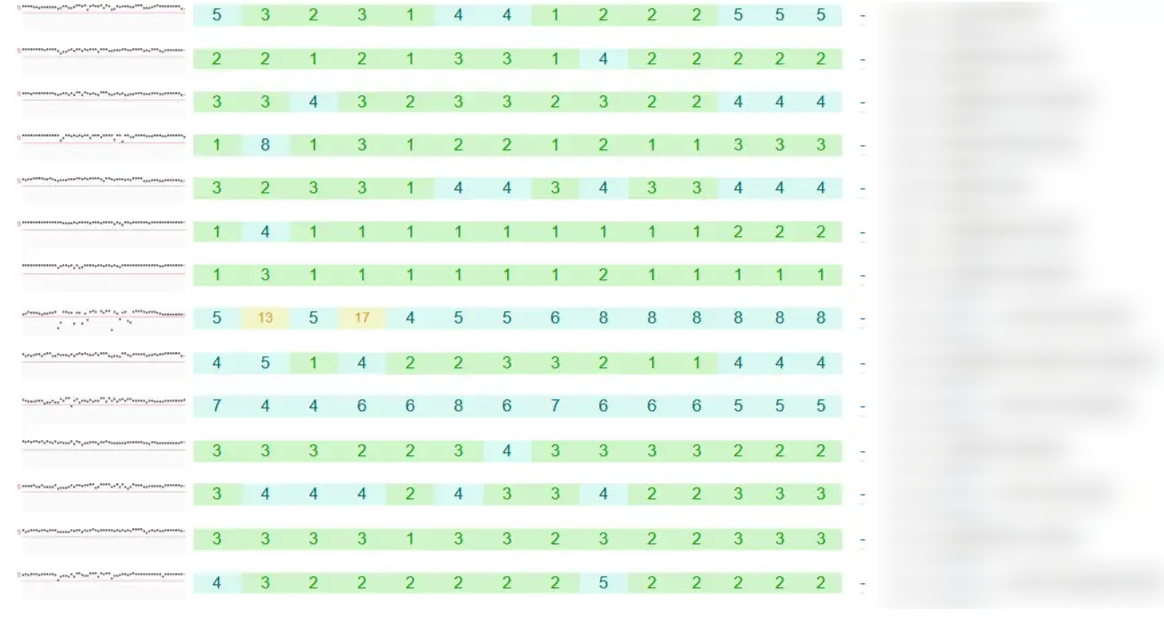
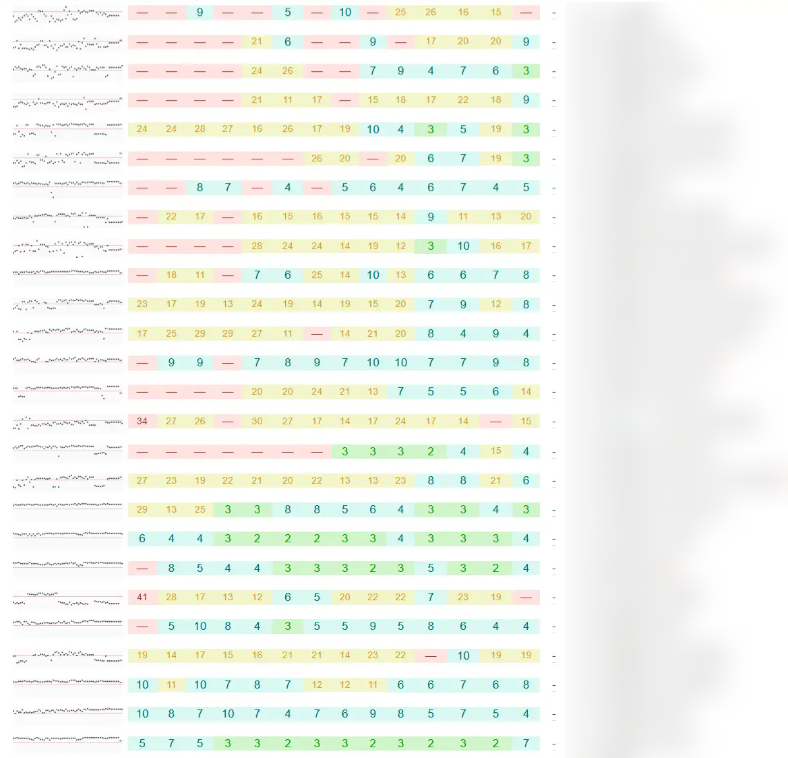
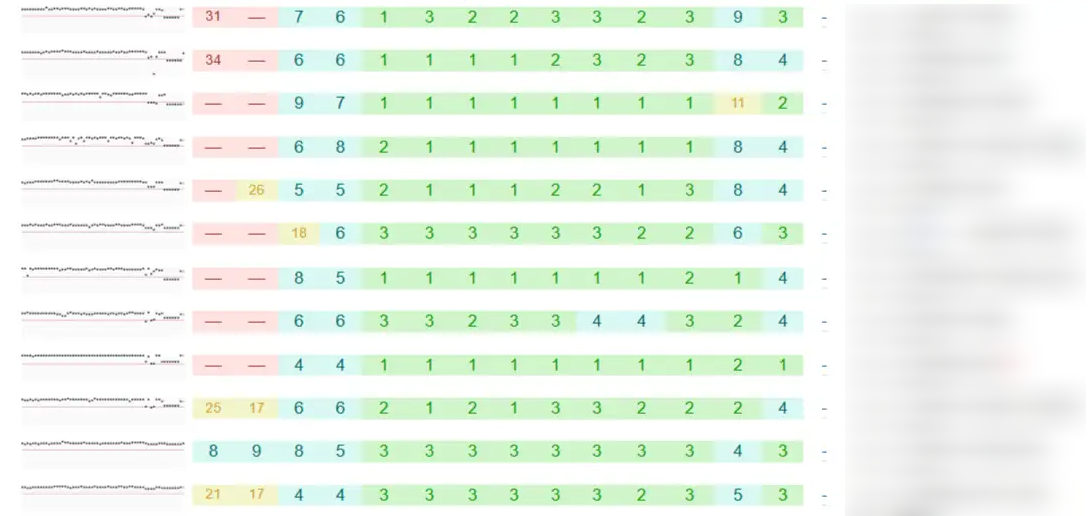
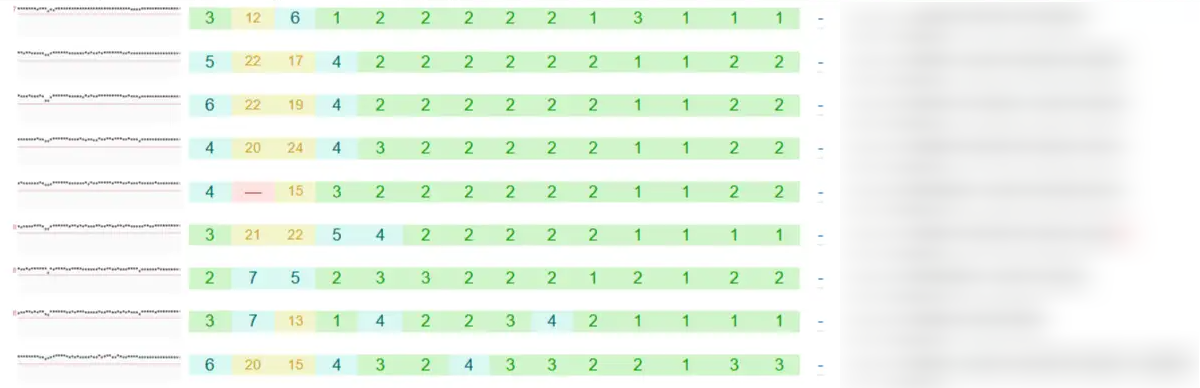
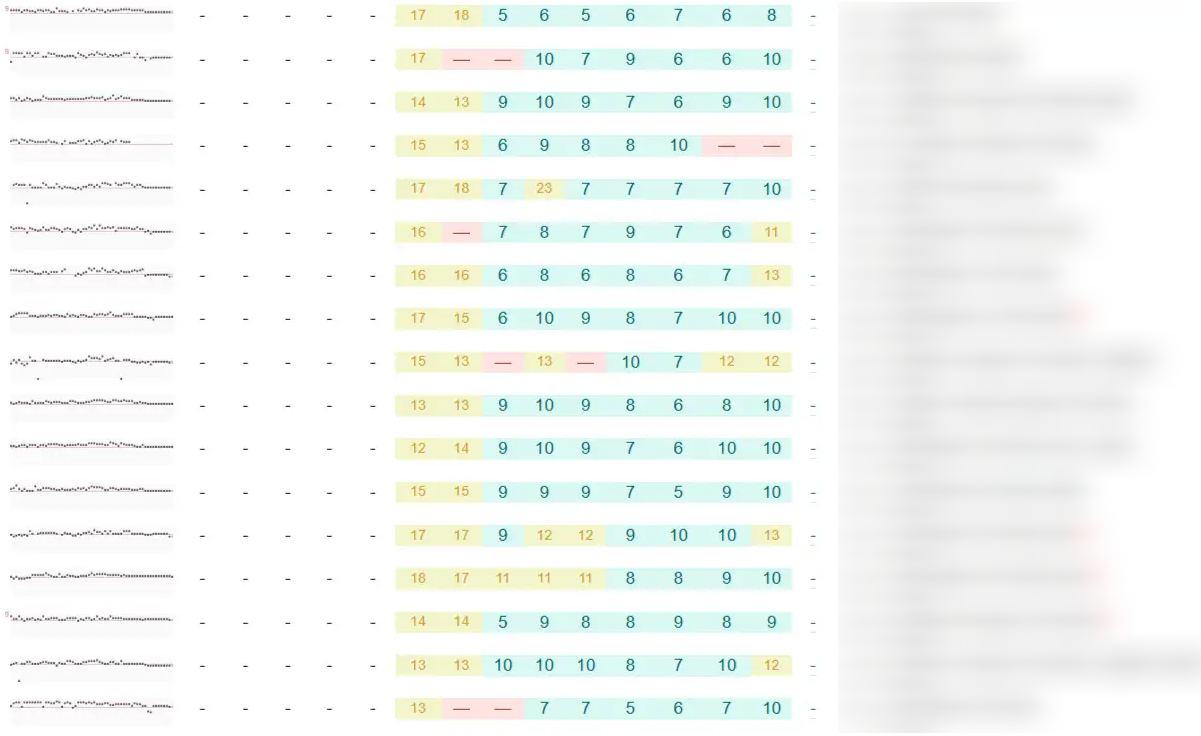
In the highest priority categorythis delivered fast results: most queries secured Top 1 and Top 5 positions. Some keywords show unstable ranking, which is related to changes in search intent due to Google algorithm updates.
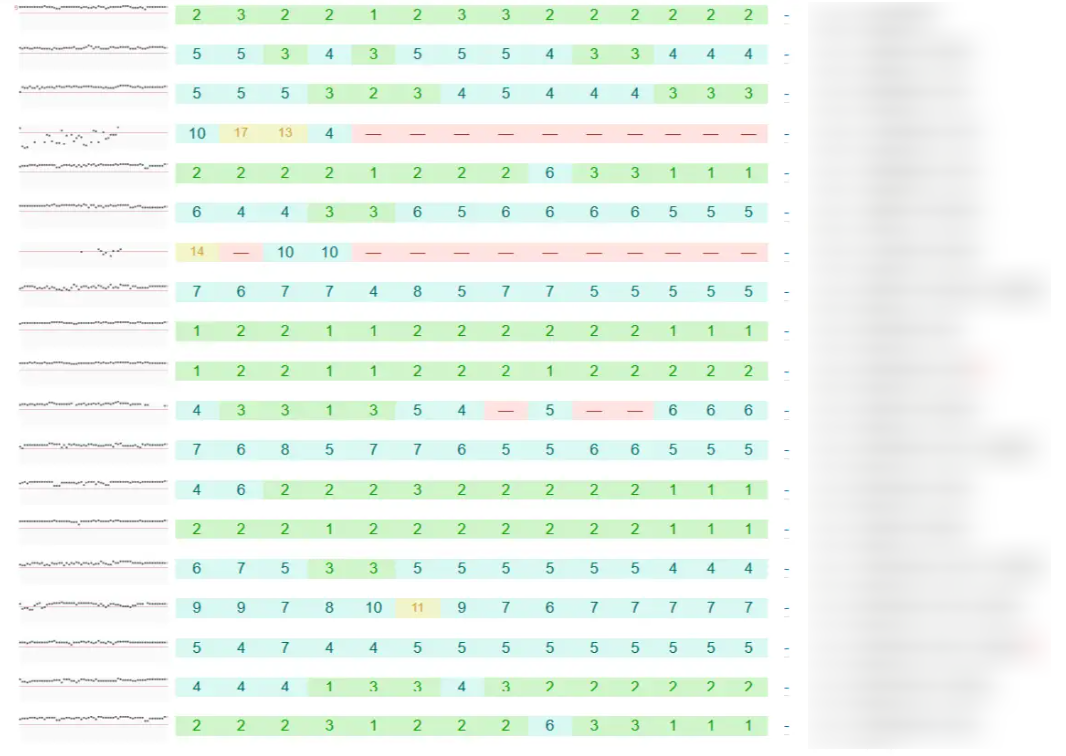
— queries in Top 1, Top 5:
While actively working on the content, our team discovered a massive issue with critical Product structured data markup errors:
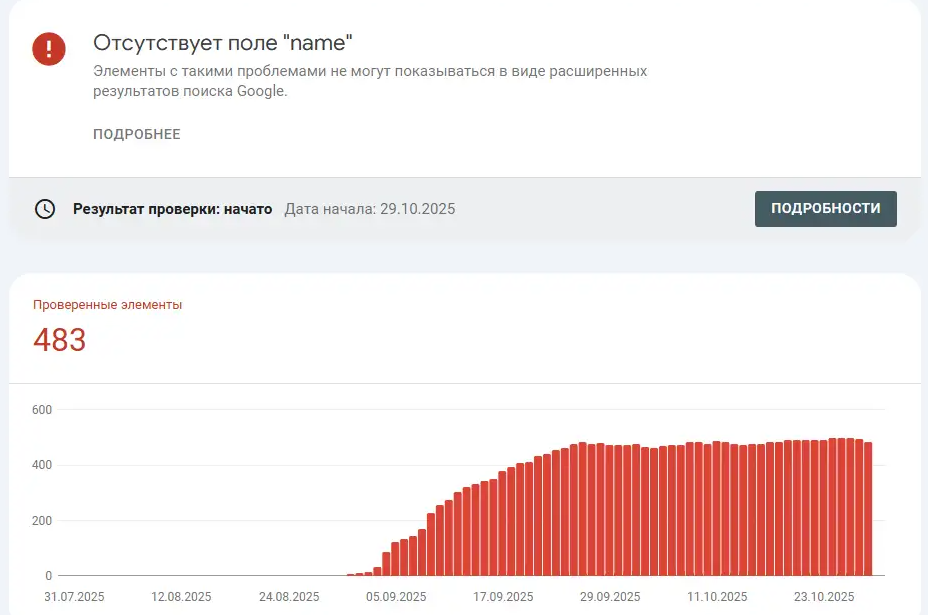
The technical part of the project was handled within the limitations of the Horoshop platform. The team prepared hypotheses, technical recommendations, and maintained close communication with the platform developers.
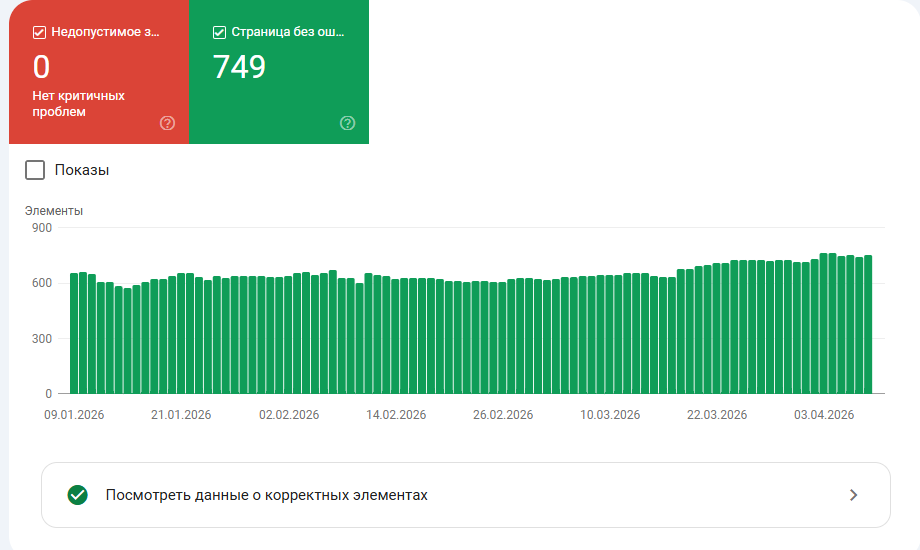
The analysis revealed an unusual cause — a specific script on product pages that affected the correctness of the markup. After adjusting it, the critical error was fixed.
As a result, product page indexing improved, which became the foundation for further visibility growth:
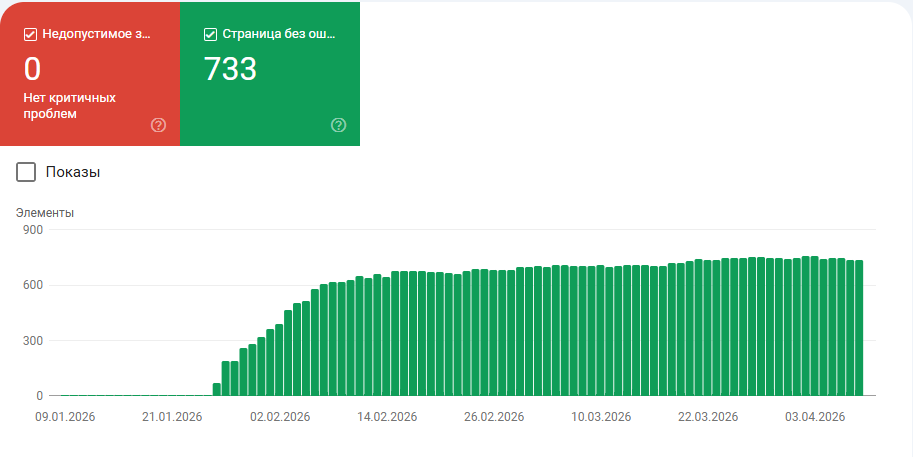
Improved Website Page Indexing
At the start of the project, one of the key problems was low-quality indexing. A significant number of pages were either not in the index or indexed incorrectly.
To solve this, we carried out comprehensive work:
implemented technical recommendations;
implemented a redirect map;
optimized the site structure;
enhanced pages with unique content.
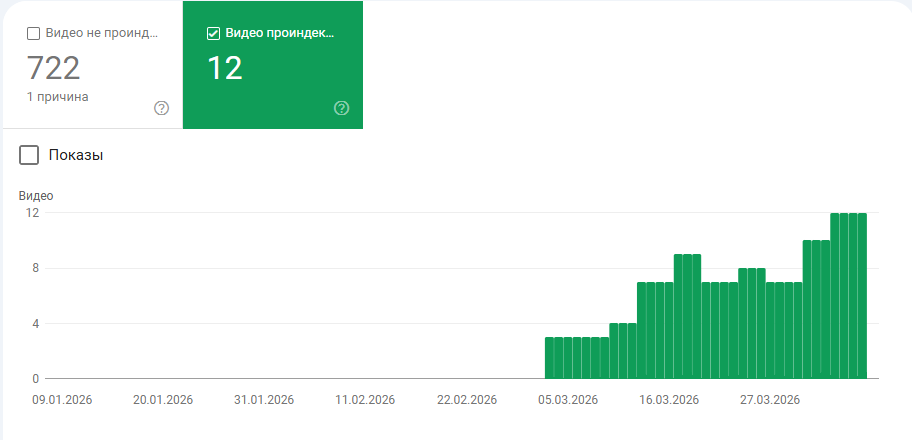
After stabilizing indexing, the team moved on to working with video content. We implemented VideoObject structured data markup on pages with videos.
Positive dynamics can already be observed:
Working with Google Business Profile
We paid special attention to Google Business Profile as a key element of local SEO.
The team systematically worked with the profile:
updated business data;
added relevant thematic content;
maintained completeness and relevance of information.
Optimization for AI Search
After fixing the fundamental technical problems, the team added optimization for generative search.
Work is being carried out in several directions:
publication of expert materials on authoritative external platforms;
building and strengthening brand reputation;
development of blog content in “top”, “rating”, “best” formats;
testing additional solutions for visibility in LLM systems.
Example of a store recommendation from ChatGPT:

Results Achieved
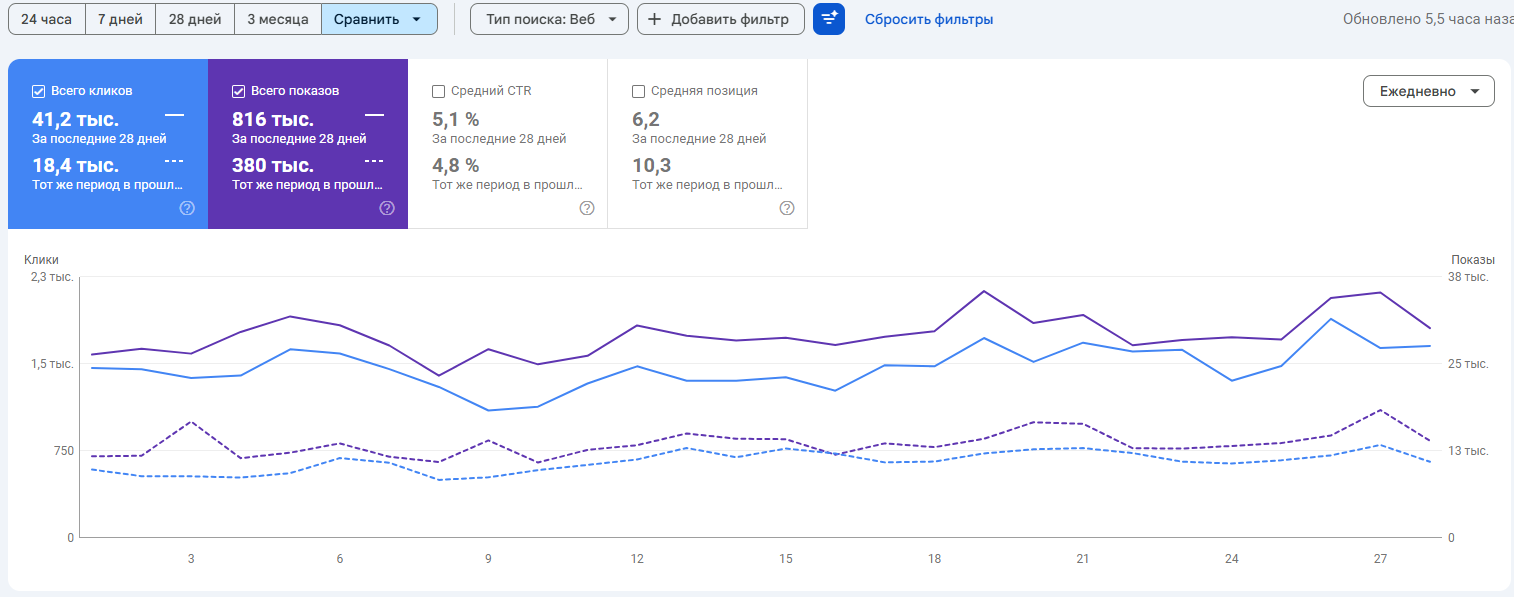
The project’s progress can be assessed using Google Search Console performance data:
Over the past 28 days compared to the same period last year, there is a clear positive trend:
clicks grew more than 2x — from 18.4K to 41.2K;
impressions also more than doubled — from 380K to 816K;
CTR increased from 4.8% to 5.1%;
average position improved from 10.3 to 6.2.
Google Analytics data also shows strong positive dynamics:

Key Takeaways
The project became a comprehensive task of restoring and scaling organic traffic after an incorrect site migration and a long period without systematic SEO work.
Thanks to the step-by-step implementation of the strategy, we managed to:
eliminate technical errors that blocked indexing and ranking;
recover lost pages and improve site indexing;
improve the site structure;
significantly expand the semantic core;
bring key commercial queries to Top 1 / Top 3 / Top 10;
improve traffic quality and behavioral metrics;
ensure stable growth of the organic channel.
Project participants:
Project SEO Specialist: Viktoriia Khalimonenko
Project Manager: Oleksandra Nesina
Reviewer / Project Lead: Nataliia Pronina